All Categories
Featured

Table of Contents
- – Your Manual To Investigating Virginia Solar Pan...
- – Essential Financial Incentives Including The 2...
- – Can Your Roof Support Solar Panel Installation...
- – A Detailed Look At The Switch Together Program...
- – How HOA Governance Shapes Your Selection Of Vi...
- – The 1,200 W Plug-in Solar Cap: A Component For...
Your Manual To Investigating Virginia Solar Panel Installation Companies
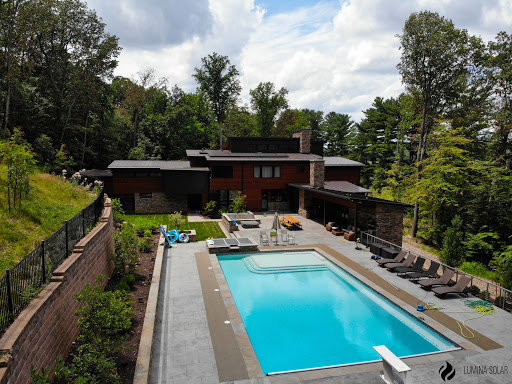
Switching to renewable energy requires you to vet Virginia Solar Panel Installation Companies thoroughly, as the quality of your system relies heavily on the technical proficiency of your chosen installer. With the average residential solar installation in the state costing $2.53 per watt, you must weigh the financial obligations of equipment, labor, and potential add-ons like a battery backup against your long-term energy goals. While Top-rated solar panel installation companies serving Virginia provide varied financing structures and performance guarantees, your success rests on balancing these professional credentials with your specific site constraints. By comprehending how to assess a solar installation quote through standardized metrics, you can confidently identify Which Virginia companies specialize in solar panel installation for your unique property needs. This guide provides the impartial framework required to compare your options and secure a dependable, efficient system.
“Lumina Solar helps you choose the right financing for your situation.” — Lumina Solar
Essential Financial Incentives Including The 25 kW Property Tax Exemption Cap
The 25 kW tax waiver cap is a vital financial advantage for Virginia solar owners, as it ensures that the extra value of your solar panel installation does not increase your annual property tax assessment. While you investigate Which Virginia companies specialize in solar panel installation, you should assess how these various financial mechanisms influence the overall yield on your investment.
“A special tax rate is available to qualified residential and commercial energy-efficient buildings, not including the land on which they are located.” — assessor.virginiabeach.gov
Beyond the property tax break, you can utilize multiple state and federal programs to offset your initial capital expenditure. These incentives operate as compromises between immediate cost reductions and long-term production income:
- Net Metering: You receive full retail-rate credits for excess electricity exported to the grid, which helps reduce your monthly utility bills.
- Solar Renewable Energy Credits: You gain tradable credits based on the entire energy produced by your system, generating a recurring revenue stream.
- Federal Tax Credit: You may claim this incentive for systems installed in service before January 1, 2026; however, this credit is unavailable for systems installed in service on or after that date.
When assessing your options, consider the following table regarding the availability and nature of these financial benefits:
| Incentive Type | Financial Impact |
|---|---|
| Property Tax Exemption | Stops tax increases on systems up to 25 kW |
| Net Metering | Provides retail-rate credits for excess production |
| Solar Renewable Energy Credits | Generates revenue based on system result |
Confirm with your chosen provider that your system design stays within the 25 kW threshold to ensure you remain eligible for the tax waiver.
When evaluating Virginia Solar Panel Installation Companies, you must balance the average solar installation cost of $2.53 per cost per watt against the long-term benefits of grid credit program and Solar Credits. While a typical 13.99 kW system usually ranges from $30,075 to $40,689, you should weigh the added $10,000 to $13,000 for a battery backup against the reliability of your local grid and the efficiency gains from your site's 4.2 to 4.7 daily irradiance hours. To guarantee your project meets rigorous quality standards, you should contact Virginia solar power installs to find an contractor holding an active NABCEP certification who can handle complex HOA solar rules and confirm if your roof suitability supports a property tax break for systems up to 25 kW. Whether you choose a traditional array or a 1,200-watt outlet solar, comparing each solar estimate requires evaluating financing options, potential solar tax incentives, and participation in the reverse auction program to ascertain which path provides the most value for your specific energy needs.
Can Your Roof Support Solar Panel Installation With 4.2–4.7 Peak Sun Hours Daily?
Your roof is suitable for solar setup if its physical characteristics allow it to capture a substantial portion of the 4.2 to 4.7 sun hours per day available across the state. Evaluating these conditions is one of the primary ways you can see How Virginia solar panel installation companies compare, as each firm may utilize different modeling software to forecast your system’s extended energy output based on your specific roof geometry.
To determine if your property satisfies the necessary criteria, consider the following technical factors:
- Orientation: South-facing roof planes typically provide the greatest energy output, though east and west-facing planes remain viable for many households.
- Pitch: The angle of your roof influences the incidence of sunlight; installers look for slopes that align well with the local latitude to maximize absorption.
- Shading: Nearby structures, mature trees, or chimneys cast shadows that significantly degrade production; installers perform site surveys to measure this impact.
- Age and Integrity: Because a solar setup is a long-term commitment, the underlying roof structure must have adequate remaining lifespan to avoid the expense of removal and reinstallation during future repairs.
Consult a roofing expert to confirm the structural condition of your shingles or tiles before inviting an solar company to conduct a formal site assessment.
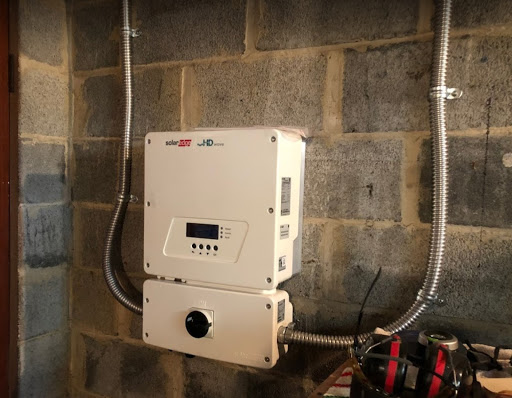
A Detailed Look At The Switch Together Program Versus Virginia Solar Panel Installation Companies
The Switch Together program is a statewide bulk-purchasing initiative that leverages reverse auctions to lower the cost of solar panel installation for homeowners compared to traditional procurement methods. While many homeowners research Which Virginia companies specialize in solar panel installation to obtain a custom agreement, this program collects demand to influence pricing dynamics directly.
“Virginia also offers a solar property tax exemption, meaning you don't need to pay a higher property tax for adding solar panels to your house.” — energysage.com
Selecting between a bulk-purchasing program and direct engagement with an provider involves clear trade-offs regarding customization, timing, and administrative supervision. The following table highlights the functional differences between these two acquisition paths:
| Feature | Switch Together Program | Direct Installer Engagement |
|---|---|---|
| Pricing Model | Competitive reverse auction | Individual solar installation quote |
| System Customization | Standardized equipment packages | Customized to specific energy needs |
| Timeline | Fixed enrollment periods | Flexible scheduling |
| Selection Process | Pre-vetted installer pool | Independent market research |
Participating in a group-buying program simplifies the vetting process by limiting your options to installers that have met specific operational and safety benchmarks during the auction phase. Conversely, managing your own search allows for more precise control over equipment brands, such as picking specific high-efficiency modules or choosing whether to include a energy storage system into your original project layout. Each options require you to verify that the final contract aligns with your property’s specific hue profile and consumption history.
Evaluate your household's distinct energy requirements against the uniform equipment tiers offered by the program to ascertain if the potential cost reductions outweigh the loss of customization versatility.
How HOA Governance Shapes Your Selection Of Virginia Solar Panel Installation Experts
HOA rules regarding solar installations in Virginia are governed by state law, which limits the power of homeowners associations to restrict or ban solar energy equipment. These regulations ensure that you maintain the right to install systems on your property, provided the layout meets specific performance and cost limits.
“No association shall prohibit an owner from installing a solar energy collection device on that owner's property unless the recorded declaration for the association establishes such a prohibition.” — law.lis.virginia.gov
When you assess Virginia solar panel installation companies worth hiring, you must verify that the suggested design complies with these statutory protections. Under state law, an association cannot enforce rules that impose the following burdens on your project:
- An increase in the total project cost by more than 5%.
- A decrease in the projected energy output of the system by more than 10%.
- Prohibitions that effectively hinder the installation of a working solar array.
To manage these requirements, it is essential to evaluate how different installers manage the approval process for common community restrictions. The subsequent table outlines how standard design constraints are weighed against your legal rights:
| Restriction Type | Legal Threshold | Installer Strategy |
|---|---|---|
| Aesthetic Placement | Must not diminish output by >10% | Improve panel arrangement for efficiency first |
| Structural Cost | Must not increase cost by >5% | Limit bespoke racking otherwise complex mounting |
Review your association’s specific architectural standards and evaluate them against the performance modeling provided by your solar firm to ensure the design remains within these legal boundaries.
The 1,200 W Plug-in Solar Cap: A Component For Virginia Solar Panel Installation Planning.
The 1,200 W plug-in solar cap establishes a legal threshold for micro-scale, grid-tied energy generation that operates independently of traditional rooftop infrastructure. As of July 1, 2026, Virginia residents may utilize these systems to counterbalance electricity usage by connecting modular panels directly to standard interior wall outlets. While these systems provide a simplified entry point for renewable energy, they remain different from the services provided by full-service Virginia Solar Panel Installation Companies, which focus on large-scale arrays and complex electrical integration.
“Starting January 1, 2027, a qualifying device is exempt from traditional interconnection and net-metering requirements and utility approval or device-related fees, subject to Chapter 1052's conditions.” — pluginsolarus.com
When you are Finding a reliable solar panel installation company in Virginia, it is crucial to differentiate between the scope of these plug-in units and professional rooftop projects. The following table outlines the main distinctions in execution and compliance requirements:
| Feature | Plug-in Solar System | Full Rooftop Installation |
|---|---|---|
| Capacity | Limited to 1,200 watts | Typically 13.99 kW |
| Connection | Standard wall outlet | Main electrical panel |
| Safety Standard | Required UL certification | Local permitting and inspection |
| Primary Goal | Minimal offset | Whole-home energy production |
Plug-in systems must be UL certified to guarantee they automatically disconnect from the grid during power failures, stopping back-feeding that could endanger utility workers. Because these units do not require the structural roof assessments or complex permitting necessary for larger arrays, they occupy a different market segment entirely. Before buying a plug-in unit, confirm that your home's interior wiring is rated to support the specific load of the inverter to prevent potential circuit overloads.

Table of Contents
- – Your Manual To Investigating Virginia Solar Pan...
- – Essential Financial Incentives Including The 2...
- – Can Your Roof Support Solar Panel Installation...
- – A Detailed Look At The Switch Together Program...
- – How HOA Governance Shapes Your Selection Of Vi...
- – The 1,200 W Plug-in Solar Cap: A Component For...
Latest Posts
Selecting Between Washington DC Solar Panel Installation Companies Today
How You Can Prepare For Washington DC Solar Panel Installation Companies
Making Informed Decisions With Virginia Solar Panel Installation Companies
More
Latest Posts
Selecting Between Washington DC Solar Panel Installation Companies Today
How You Can Prepare For Washington DC Solar Panel Installation Companies
Making Informed Decisions With Virginia Solar Panel Installation Companies